


Selling your San Francisco home? Buying your next home first could cost you thousands in property taxes—or put your Prop 19 tax-base transfer at risk.

The order of your sale and purchase matters more than you might think. Before you list or make an offer, see how each choice affects your taxes, cash flow, and moving timeline.
If you’re planning to downsize, deciding whether to sell first or buy first under Prop 19 is one of your biggest choices.
Under California's Proposition 19, eligible homeowners aged 55 and older may transfer their property tax base to a replacement home. However, buying before selling comes with important deadlines and potential costs.
Can You Buy Before Selling Under Prop 19?
Yes. Under Prop 19, eligible homeowners can buy their next primary home up to two years before selling their current one. The transfer takes effect on whichever comes later: the sale or the purchase.
But buying first carries two key risks:
-
The Prop 19 two-year rule: If you buy first and don’t sell within two years, you lose eligibility for that tax-base transfer.
-
Full-value taxes: Until your old home sells, your new home is taxed at its full market value. You won’t get those earlier taxes back through Prop 19.
To qualify by age, you must be at least 55 when your old home sells. Your old home must also be your main home. It must be eligible for the homeowners’ exemption when you sell it or within two years of buying your new home.
These rules matter most if you’ve owned your home for decades and have a low tax base. For eligible SF homeowners aged 55 and older, the property tax base transfer can make a move more affordable.
Option 1: Sell Your Home First
Selling first gives you a clear picture of your finances. Once your sale closes, you know what you have left after selling costs and any mortgage payoff. That helps you set a realistic budget for your next home.
-
Benefit: You may avoid paying for two homes at once.
-
Tradeoff: You need a place to live while you search.
-
Ways to bridge the gap: A short-term rental, storage, or a negotiated rent-back. Each option has costs and depends on the details of your sale.
Selling first suits owners who want to know their numbers before they buy.
Option 2: Buy Your Next Home First
Buying first lets you secure the home you want before you sell. That helps if you want an elevator condo, a certain floor plan, or a single-level home. You may also have time to move your things before you get your house ready to sell.
If fewer stairs and easier upkeep are priorities, explore Single-Level Homes and Downsizing.
But buying first can mean paying for two homes at once:
-
Overlapping costs: You may owe the mortgage, insurance, utilities, upkeep, and property taxes on both homes.
-
A slower sale: Your budget needs room in case your home takes longer to sell than expected.
-
The two-year deadline: If the sale takes more than two years, you lose the Prop 19 transfer for that replacement home.
How Timing Changes Your Taxable Value
Prop 19 sets a value limit based on when you buy your new home. The limit shows how much more your new home can be worth before extra value is added to your transferred tax base.
| When you buy | Value limit |
|---|---|
| Before selling your old home | 100% of the old home’s full cash value |
| Within the first year after selling | 105% |
| In the second year after selling | 110% |
The assessor sets these full cash values. They may not match your sale and purchase prices.
A San Francisco Example
Say your current home is worth $2 million. Its taxable value, called the factored base-year value, is $450,000. You want to buy a condo worth $2.08 million.
Scenario A: Buy Before Selling
The limit is 100% of your home’s value, or $2 million. The condo is $80,000 over that limit, so that $80,000 is added to your transferred base. Your new taxable value is about $530,000, assuming no other adjustments.
Scenario B: Buy Within One Year After Selling
The limit rises to 105%, or $2.1 million. The $2.08 million condo is under that limit, so nothing is added under the value comparison. Your taxable value is about $450,000, plus any inflation adjustment that applies between the two closings.
This doesn’t mean you pay zero property tax. It means no extra value is added to your transferred base under this limit.
What Is the Annual Property Tax Difference?
This example uses an assumed tax rate of 1.2% a year. It leaves out inflation adjustments and other property tax charges.
| Property Tax Comparison | Buy first | Sell first, then buy within 1 year |
|---|---|---|
| Estimated taxable value | $530,000 | $450,000 |
| Estimated annual property tax | $6,360 | $5,400 |
| Annual difference | +$960 | — |
This example uses an assumed annual property tax rate of 1.2%, rounded from San Francisco’s FY 2026–27 rate of approximately 1.18%. It excludes inflation adjustments, special assessments, and other property tax charges.
What Could Buying First Cost During the Transition?
Now say you buy the $2.08 million condo six months before you sell your house. At an assumed 1.2% rate, here is how six months of property tax compares:
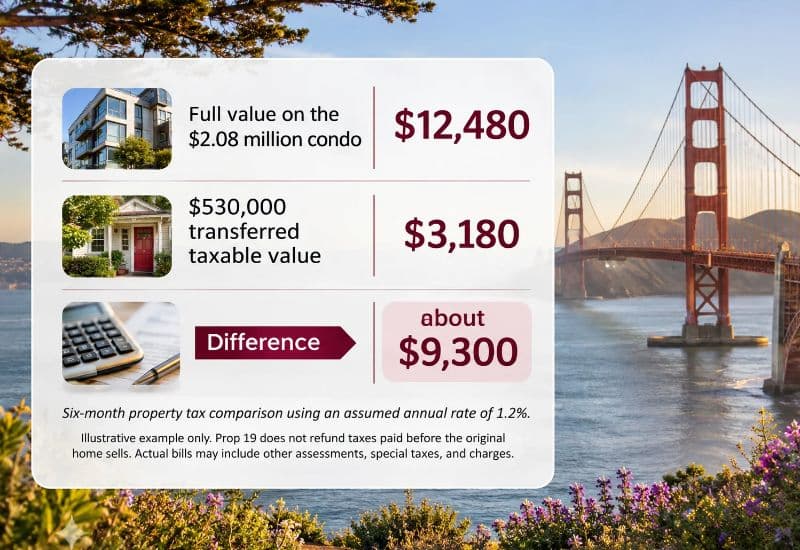
Prop 19 won’t refund the taxes you pay before your old home sells. These are simple estimates, and actual bills may include other assessments, special taxes, and charges. You may also pay mortgage costs, insurance, HOA dues, utilities, and upkeep on both homes.
For some owners, the ease of buying first is worth the extra cost. Others may prefer to sell first and free up their equity. The key question is whether these costs work within your financial plan.
Could a Sale Contingency Help?
A third option is to buy your next home with a sale contingency. This makes your purchase depend on selling your current home, under the terms you negotiate. It can lower some risks, but sellers don’t have to accept these offers.
A longer closing or a negotiated rent-back could also ease the move. Whether these work depends on the home, the market, and what the other party will accept. Talk through your options with your agent and lender before you make an offer.
Questions to Answer Before Listing
Before you choose an order, talk with the people who will help with your move.
Ask your county assessor or property tax adviser:
-
Is my current home eligible for the homeowners’ exemption?
-
How would buying first change my transferred taxable value?
-
Which dates and documents decide whether I qualify?
Ask your lender or financial adviser:
-
Can I finance my next home before I sell?
-
How long could I afford to carry two homes?
-
How much cash should I keep in reserve if my home takes longer to sell?
Ask your real estate agent:
-
Could a sale contingency, rent-back, or longer closing help with both transactions?
-
How long might my home take to sell?
-
How should we plan the purchase and sale dates?
Also, think about which features matter most in your next home. These talks help you weigh costs and benefits before you buy.
Wondering how these costs might affect your plans? Talk Through Your Next Move With Rebecca and explore your options.
When and Where Do You File Your Prop 19 Claim?
The tax-base transfer is not automatic. If you’re claiming the age-55 benefit, you’ll generally use Form BOE-19-B.
-
Where: File with the assessor in the county where your new home is located.
-
When: After both transactions close and you’ve moved in.
-
Deadline: Within three years of buying your new home or completing its qualifying construction. A timely claim allows full relief back to the transfer date.
-
Late claims: If you file after three years, you may still qualify for future tax relief, but not the same retroactive benefit. For an approved late claim, relief begins on the lien date of the assessment year in which you file.
If your new home is in San Francisco, contact the San Francisco Assessor-Recorder. Check the official California State Board of Equalization Proposition 19 guidance for current rules.
Which Option Makes More Sense for Your Next Move?
Selling first gives you more certainty about your equity and budget. Buying first gives you more control over which home you get and when you move. Neither choice is right for everyone.
For homeowners planning to downsize, the goal is to balance taxes, timing, housing needs, and long-term costs. With San Francisco rightsizing, your next home should support your plans without creating financial pressure.
Getting your home ready to sell? Read San Francisco Retirement Downsizing.
Discuss Your Downsizing Plan With Rebecca
Your next move should start with clear choices, not pressure to buy or sell before you’re ready. Rebecca White helps longtime homeowners weigh their selling options, home equity, and priorities for their next home.
Ready to explore what comes next? Tell Rebecca about your plans by calling her directly at (415) 412-1977. Take the first step toward finding the place that is exactly right for you.
This article provides general information, not legal, tax, or financial advice. Talk with your county assessor and qualified advisers about your situation.